Dual Flush
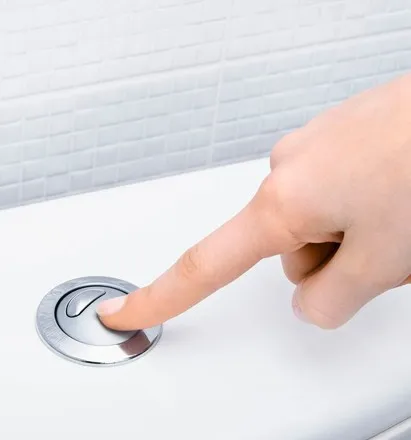
A dual-flush toilet provides separate buttons or a split-handle lever so you can choose a light flush for liquid waste and a full flush for solids. By using only the water you need, dual-flush fixtures can slash toilet water use by more than half compared with older 3.5 gpf models—saving thousands of gallons (and dollars) every year while still clearing the bowl quickly and quietly.
Two distinct flush volumes—typically ≈0.8–1.1 gpf for liquids and ≤1.28 gpf for solids.
Can reduce toilet water use by up to 67 % versus legacy toilets.
Qualifies for many municipal water-efficiency rebates (WaterSense-labeled models).
Modern valves and glazed trapways maintain clog-free performance.
Key Benefits
Significant Water Savings
Choosing the lower flush for liquids cuts unnecessary water use every day.
- Family of four can save 4 000–6 000 gal per year.
- Eases strain on wells or septic systems.
Lower Utility Bills
Using less water translates directly to lower monthly charges.
- Payback often within the first year in high-rate regions.
- May unlock rebates or tax incentives.
Eco-Friendly Choice
Conserves potable water and helps communities meet conservation goals.
- Supports LEED and WaterSense certification points.
- Reduces energy used in water treatment and pumping.
How It Works
1
Dual-Action Flush Valve
Inside the tank, a valve with two lift heights connects to separate buttons or a split lever.
2
Light Flush for Liquids
Press the small button: only part of the tank empties (≈0.8–1.1 gpf).
3
Full Flush for Solids
Press the large button: the entire valve opens, delivering a maximum of 1.28 gpf (WaterSense spec).
4
Optimized Bowl & Trapway
Precision-engineered rim jets and a fully glazed 2-inch+ trapway whisk waste away without clogs.
5
Rapid Re-fill
The valve reseats and the tank refills in seconds, ready for the next choice.
Who Needs This Feature
Eco-Conscious Households
Families aiming to cut their environmental footprint without lifestyle trade-offs.
Regions with High Water Costs or Drought
Areas where every gallon saved helps both the wallet and local supply.
Large Families & High-Traffic Bathrooms
Frequent flushes mean water savings add up quickly.
Septic-System Owners
Lower flush volumes reduce stress on septic tanks, potentially extending pump-out intervals.
Common Misconceptions
"Dual-flush toilets clog more often."
Modern designs use large, fully glazed trapways and powerful rim wash to keep clog rates low.
"They’re confusing for guests."
Intuitive iconography (half/full water drops) or small/large buttons make the choice obvious after one use.
"Water savings are minor compared with single-flush HETs."
Real-world studies show dual-flush models can save 15–20 gal per person per day over older fixtures.
Frequently Asked Questions
Q: How much can I actually save?
A: Replacing a 3.5 gpf toilet with a dual-flush model can save 4 000–6 000 gal of water annually for a four-person household.
Q: Are dual-flush toilets noisy?
A: No. High-efficiency bowl hydraulics deliver a quick, quiet flush comparable to premium single-flush units.
Q: Can I retrofit my current toilet?
A: Conversion kits exist, but factory-designed dual-flush toilets generally offer better performance and full WaterSense certification.
Q: Do they work with septic systems?
A: Yes. Reduced flush volume can lessen the load on septic tanks and extend pump-out intervals.