Heated Seat
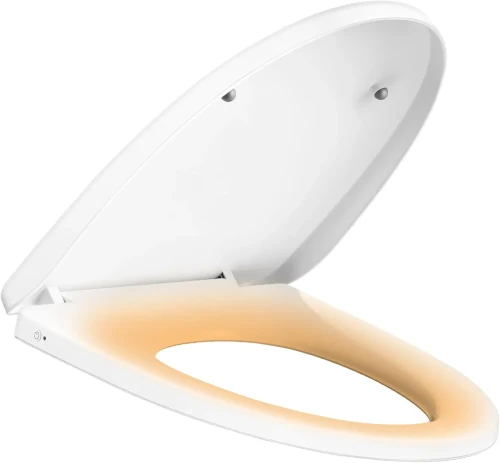
A heated seat transforms a chilly porcelain perch into a spa-like experience. Internal ceramic or carbon-fiber elements raise the seat surface to a comfortable 90 – 104 °F (32 – 40 °C) in minutes, while smart thermostats hold the set point without hotspots. Many models add occupancy sensors, eco timers, and quick-heat boosts so you enjoy warmth only when needed—keeping energy use surprisingly low.
Adjustable temperature—typically 3 – 5 levels or 86 – 104 °F range.
Occupancy sensor turns heat off when the seat is vacant.
Eco/sleep modes cut power draw up to 60 % overnight.
Uniform carbon-fiber or PTC (positive-temperature-coefficient) elements prevent scorching.
Key Benefits
Enhanced Comfort
No more icy shock on winter mornings—steady warmth relaxes muscles and promotes healthy blood flow.
- Helps users stay relaxed long enough for complete evacuation.
- Reduces tension for seniors or those with arthritis.
Customizable & Energy-Smart
Choose the exact warmth you like and let timers or sensors manage power.
- Quick-heat boost warms from room temp in <60 s on premium seats.
- Sleep mode automatically drops to ~86 °F when unused.
Hygienic Surface
Warmth discourages condensation, keeping the seat dry and reducing bacterial growth.
- Less moisture means fewer odors and easier wipe-downs.
How It Works
1
Embedded Heating Element
Carbon-fiber or PTC ceramic strip bonded under the seat warms evenly without hotspots.
2
Thermostat & Controls
Digital thermostat—accessed via side panel or remote—lets users pick their preferred temperature.
3
Occupancy Sensor
An infrared seat sensor shuts heat off automatically when no one is seated to save energy.
4
Eco / Sleep Scheduling
Programmable timers or ambient-light sensors drop set-point overnight, then resume full warmth at wake-up time.
5
Safety Cut-offs
Built-in overheat fuse and flame-retardant plastics keep the seat safe even during extended use.
Who Needs This Feature
Cold-Climate Households
Eliminates winter-morning discomfort and condensation in unheated bathrooms.
Seniors & Mobility-Impaired Users
Warmth relaxes pelvic muscles and eases joint stiffness, aiding safer sitting and standing.
Luxury Bathroom Upgrades
Pairs with bidet seats and smart toilets to create a spa-like experience.
Health-Conscious Individuals
Soothing heat can ease hemorrhoid discomfort and improve circulation during longer sits.
Common Misconceptions
"Heated seats waste a lot of electricity."
With sensors and eco modes, most seats draw only 10–15 W average—less than a night-light.
"They get uncomfortably hot."
Thermostats cap the maximum to a skin-safe ~104 °F (40 °C) and shut off if the sensor fails.
"Heating elements make the seat bulky."
Modern carbon-film heaters are millimeters thin, preserving the seat’s slim profile.
Frequently Asked Questions
Q: How much does a heated seat add to my power bill?
A: Around 1–2 kWh per month with eco mode—roughly 15–25 ¢ in most regions.
Q: Is the seat surface still safe for children?
A: Yes. Temperature limits prevent burns, and many seats offer a dedicated low-heat child setting.
Q: Can I disable the heat in summer?
A: Absolutely—toggle heat off entirely or set the thermostat to the lowest level.
Q: Do I need a GFCI outlet?
A: Because the seat is an electrical appliance in a wet zone, a GFCI-protected 120 V outlet is strongly recommended (and often required by code).