Insulated Tank
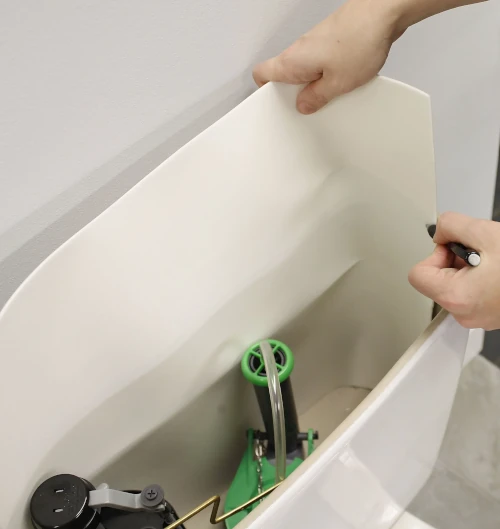
When cold supply water fills a toilet tank, the porcelain can drop below the room’s dew point, causing moisture to bead on the exterior—a problem known as “tank sweat.” An insulated tank solves this by lining the tank interior with EPS foam or creating a double-wall design. The insulation slows heat transfer, keeping the outer porcelain near room temperature so condensation never forms. Floors stay dry, sheet-rock and cabinetry avoid water damage, and daily cleanup is easier.
Foam liner or double-wall construction keeps porcelain above dew point.
Prevents puddles, warped flooring, and mildew in humid climates.
No moving parts—maintenance-free for the life of the toilet.
Often paired with high-efficiency or pressure-assist bowls; adds negligible cost.
Key Benefits
Dry, Hygienic Bathroom
Eliminates water runoff that can foster mold and bad odors.
- Protects hardwood, laminate, or carpeted floors.
- Reduces need for drip pans, towels, or after-market liners.
Lower Maintenance & Repair Costs
Stops long-term moisture damage to drywall, baseboards, and vanity kick-plates.
- Prevents peeling paint and swollen MDF cabinets.
- Avoids rust stains on metal supply lines and bolts.
Improved Thermal Stability
Insulation slows water-temperature swings, which can benefit bidet seats that mix tank water with warm wash water.
- Reduces cold-shock during winter refills.
- Helps pressure-assist vessels maintain consistent charge pressure.
How It Works
1
Foam or Double-Wall Insert
A molded EPS foam liner or secondary plastic wall is bonded inside the porcelain tank during manufacturing.
2
Thermal Barrier
The insulation traps a thin layer of air and slows heat exchange between cold water and warm bathroom air.
3
Condensation Prevention
Because the porcelain never falls below the dew-point, humidity stays in the air—no beads, no drips.
4
Silent, Maintenance-Free Operation
No valves or mixers required; the liner lasts the lifetime of the fixture without adjustment.
5
Optional Anti-Sweat Valve Alternative
Some installations add a mixing valve to temper incoming water; an insulated tank achieves the same goal passively with zero energy use.
Who Needs This Feature
Humid-Climate Homes
Coastal, southern, or tropical regions where summer humidity is high.
Air-Conditioned Bathrooms
Cold indoor air + cold water = sweat; insulation breaks the equation.
Homes with Wood or Luxury Flooring
Prevents cupping, warping, or staining from constant moisture.
Commercial & Hospitality Properties
Reduces slip hazards and maintenance calls in guest restrooms.
Common Misconceptions
"Only very old toilets sweat—new ones don’t need insulation."
Any uninsulated tank can sweat if supply water is cold and room air is humid, regardless of age.
"An insulated tank is bulky and spoils the toilet’s look."
The liner is inside the porcelain; exterior dimensions and styling remain unchanged.
"Insulation completely eliminates condensation in every situation."
It prevents sweat under normal conditions; in extreme humidity plus ice-cold supply water, minor moisture can still occur but is greatly reduced.
Frequently Asked Questions
Q: Can I retrofit insulation into my existing toilet tank?
A: After-market liner kits exist but require full tank removal and careful fitting; replacing with a factory-insulated model is usually easier and more reliable.
Q: Does insulation affect flushing performance?
A: No—the liner sits above the water and has no impact on valve flow or bowl hydraulics.
Q: Will the foam break down over time?
A: Manufacturers use closed-cell EPS or polypropylene liners that resist moisture, mold, and chemical degradation for decades.
Q: Is an insulated tank better than an anti-sweat mixing valve?
A: Both prevent condensation, but insulation is passive (no hot-water use, no valve failures) and typically cheaper long-term.